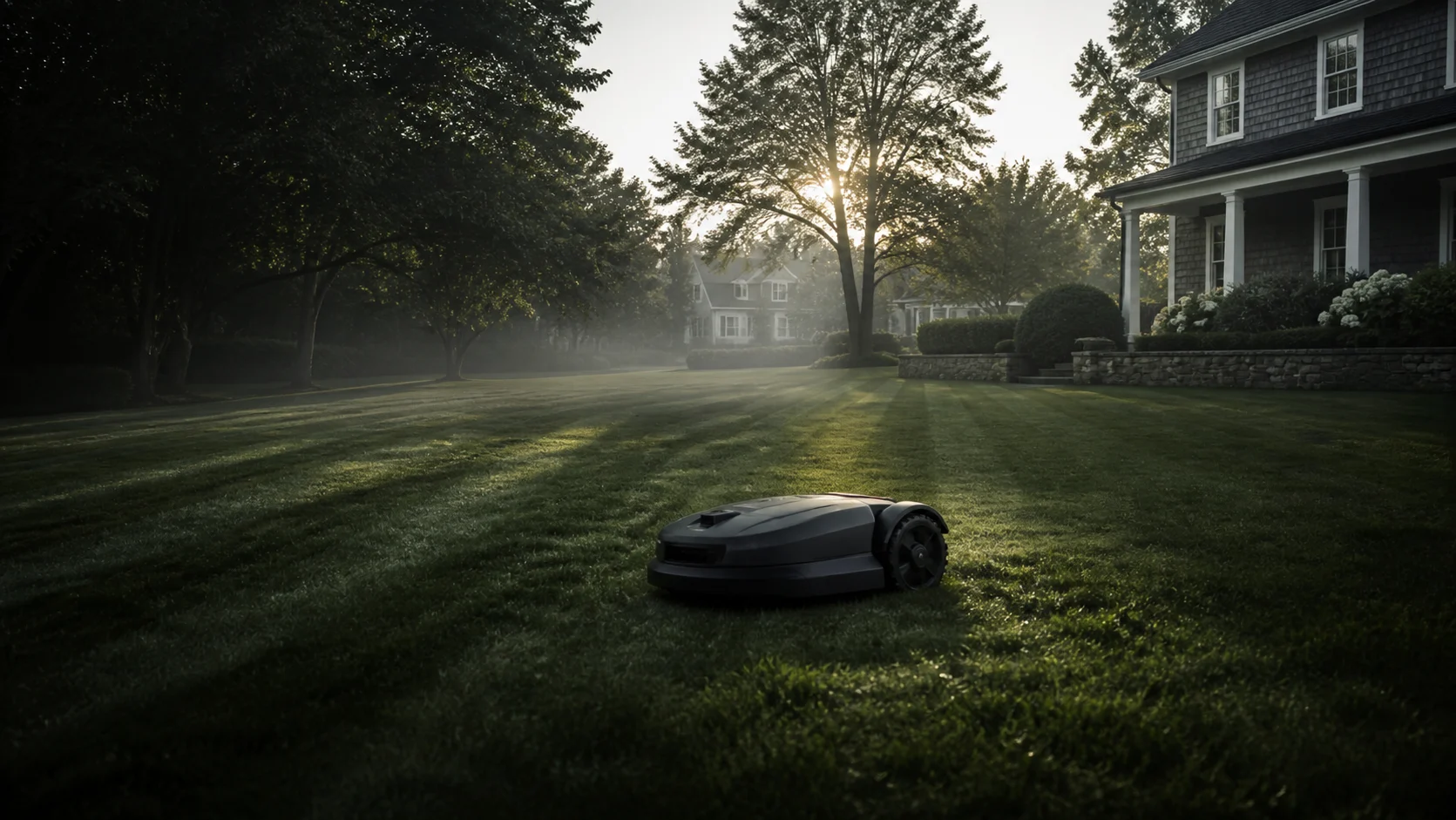
ROVOR gives commercial properties a quieter, more consistent mowing model—planned around the landscape, site activity, and the people responsible for both.
The question is not only how the grass gets cut. It is how grounds care fits into the operation.
The site waits for the scheduled crew, equipment, and arrival window.
Visible service-day disruption
Noise near occupants and visitors
A process tied to crew scheduling
The operating plan is built around suitable lawn areas and the needs of the property.
Quieter electric mowing
Site-specific planning
A service model designed to keep operating
Final fit is determined through a site assessment, but the operating model can support a range of commercial environments.
Maintain visible lawn areas with less conventional mowing noise around the daily operation.
Support a consistent landscape experience around shared residential environments.
Reduce the presence of routine mowing around guests and public-facing spaces.
Plan suitable areas around recurring site activity and grounds-care responsibilities.
Evaluate a repeatable service approach across more than one suitable location.
Use the consultation to determine where autonomous mowing can and cannot belong.
ROVOR is designed to make routine mowing less prominent while maintaining a clear professional service relationship behind it.
We discuss landscape priorities, site activity, current care, and operating constraints.
Suitable lawn areas, access, boundaries, and other operating considerations are reviewed.
The proposed equipment and operating model are matched to the property.
ROVOR manages the service relationship after implementation.
Start with the grounds, the operation, and what needs to improve. The consultation turns that context into a practical next step.
Share the location, property type, and the lawn-care challenge you are trying to solve.